Maurice Estève (1904–2001)
Maurice Estève stands among the foremost colourists of the postwar École de Paris. Born in Culan in central France, he was largely self-taught, absorbing the lessons of Cézanne, Fauvism and Cubism through years of independent study in Paris.
In 1937 he worked alongside Raoul Dufy on the monumental La Fée Électricité for the Paris International Exposition, an early immersion in colour at architectural scale.
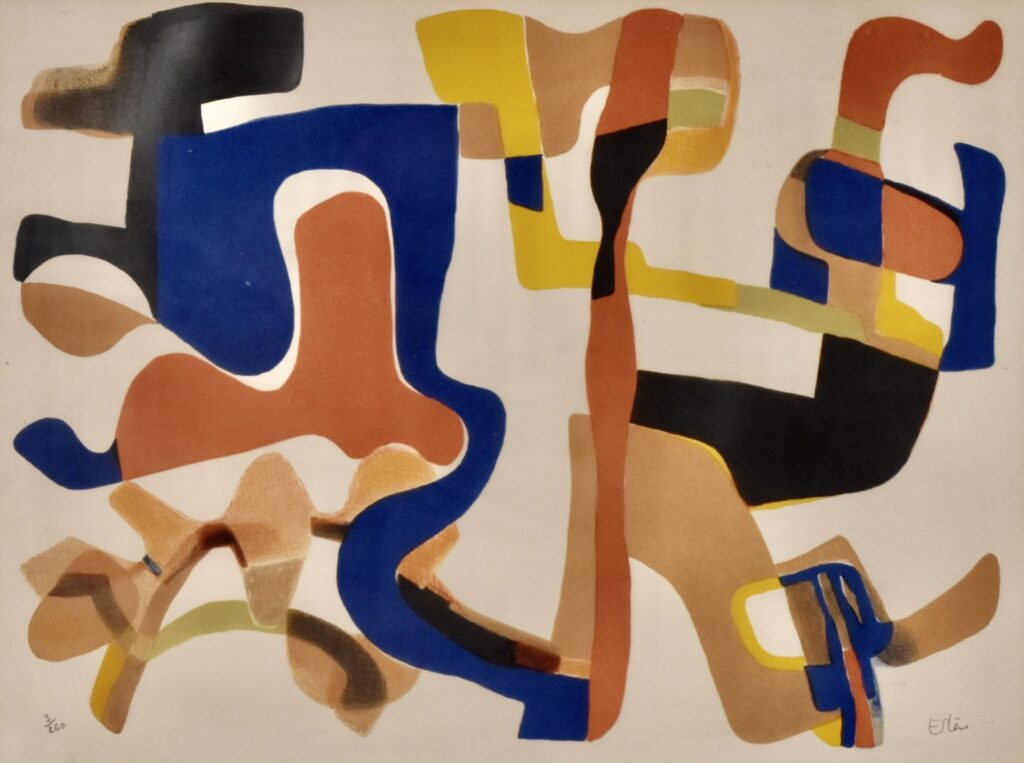
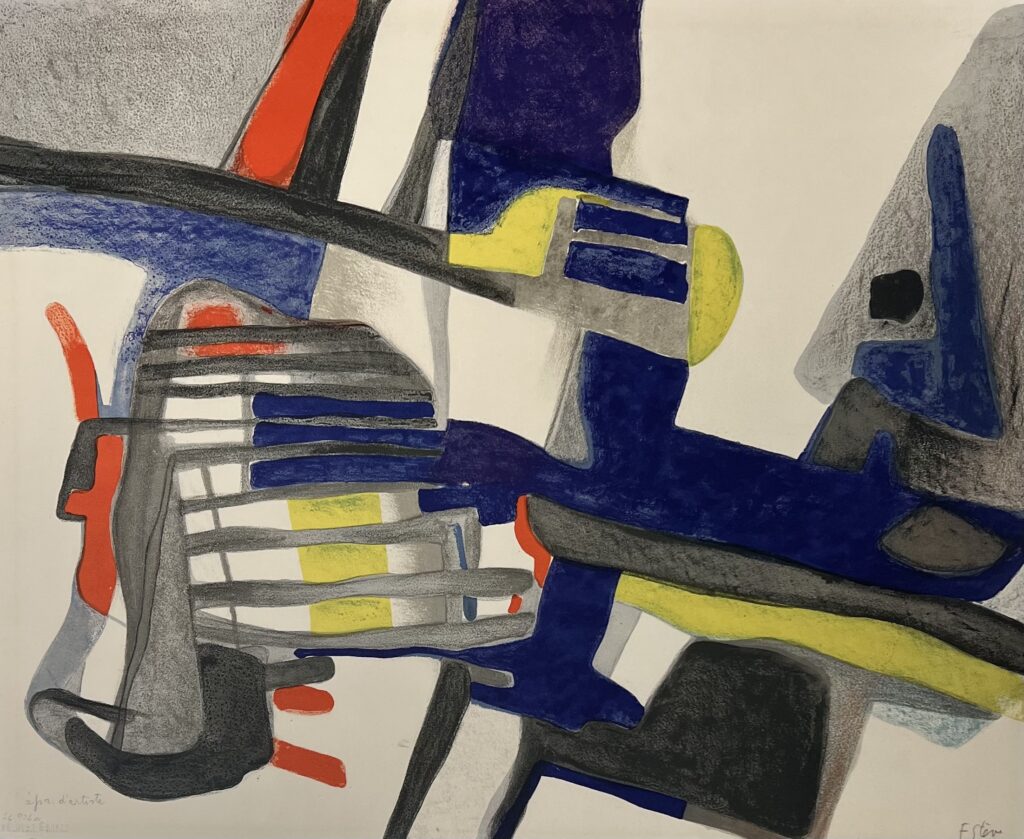
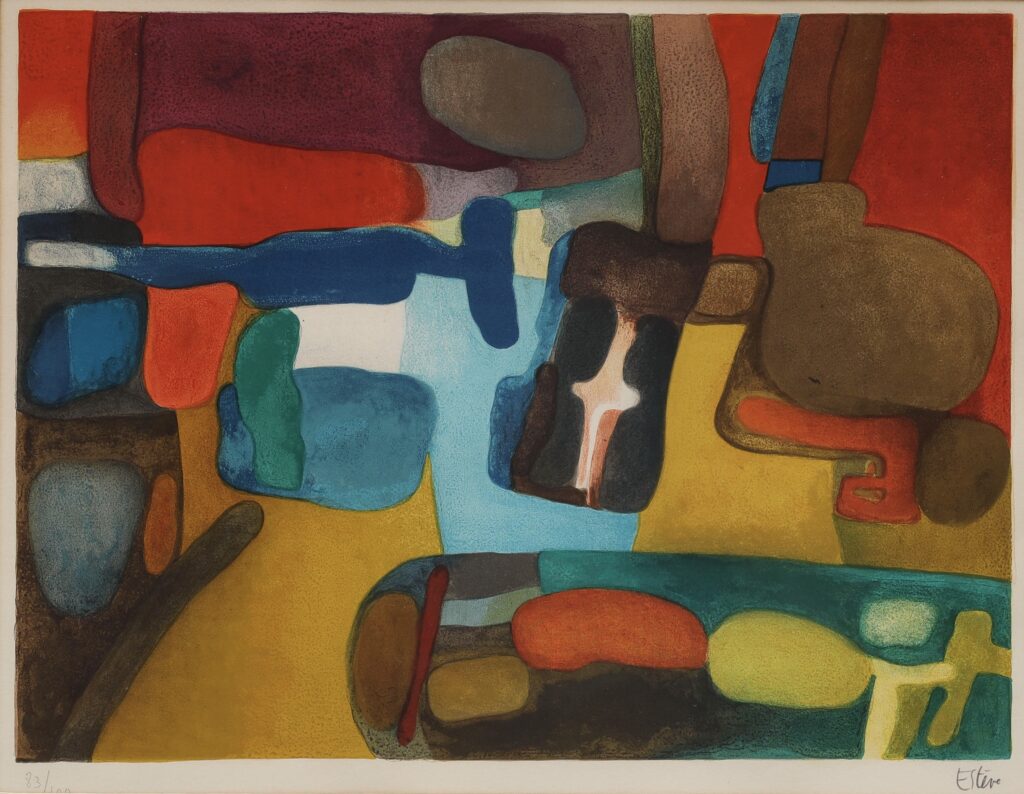
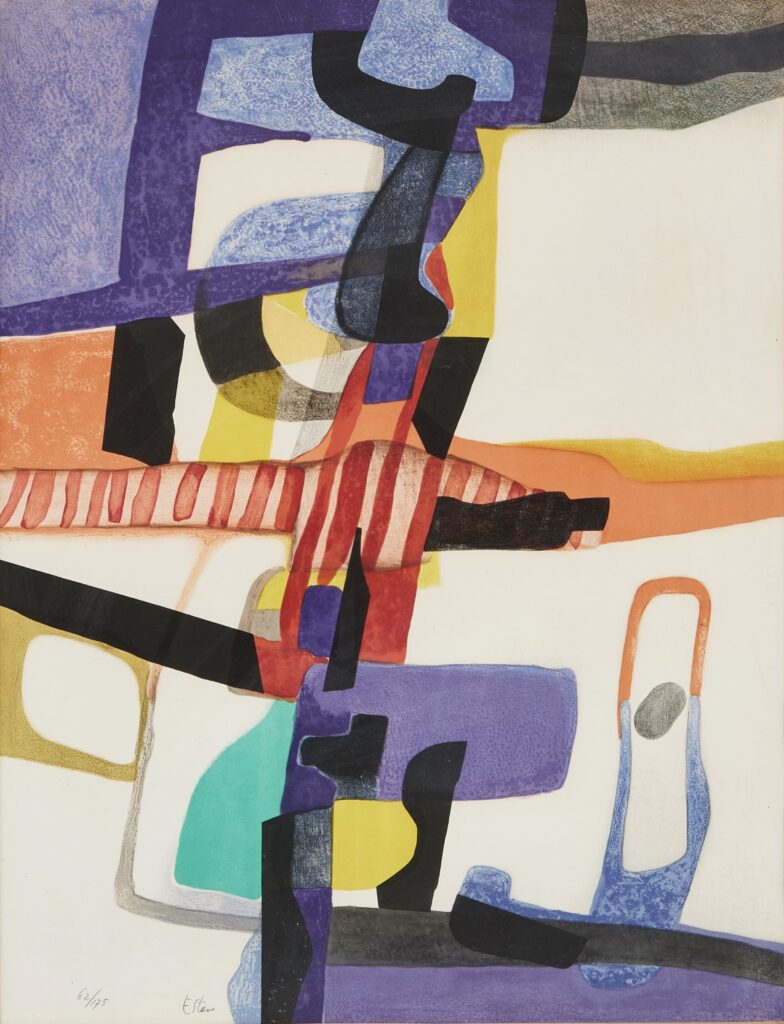
From the mid-1940s Estève moved decisively toward abstraction, developing the language that defines his mature work: dense compositions of interlocking, organically shaped planes of saturated colour, held in careful tension between structure and lyricism.
His canvases never abandon sensation entirely; light, landscape and memory pulse beneath the surface.
Estève represented France at the Venice Biennale in 1954 and was awarded the Grand Prix National des Arts in 1970. Beyond painting, he produced watercolours, collages, tapestry cartoons and stained glass.
In 1987, the Musée Estève opened in Bourges, dedicated entirely to his work — a rare honour for a living artist. He died in his native Culan in 2001, leaving one of the most joyful and rigorous bodies of colour-driven abstraction in twentieth-century French art.